
EDM Accuracy Changes What's Manufacturable
/
Product designers have pushed the boundaries of what’s possible through advanced CAD software. Today’s engineering tools can generate incredibly complex geometries, intricate mold components, and highly optimized part designs with remarkable ease.
However, creating a design on a screen and manufacturing it consistently in production are two very different challenges.
In reality, complex geometry is rarely limited by CAD. It’s limited by manufacturability.
Part tolerances are tighter, and molded components are becoming more sophisticated; traditional machining methods are reaching their practical limits. This is where Electrical Discharge Machining (EDM) becomes a critical technology.
EDM is not a secondary operation. It’s a core capability that directly impacts tooling performance, production repeatability, and ultimately, the finished part’s quality.
Versatile Mold and Design’s in-house wire EDM and sinker EDM capabilities allow us to manufacture tooling components with accuracy down to ±0.0002”, enabling designs that would otherwise be difficult or even impossible to produce reliably.
Understanding EDM: More Than Just Precision Machining
EDM is fundamentally different from conventional cutting methods.
Rather than physically removing material with a cutting tool, EDM uses controlled electrical sparks to erode conductive materials with exceptional accuracy. This process eliminates many of the limitations associated with traditional machining, particularly when working with hardened tool steels or complex geometries.
There are two primary EDM technologies used in mold manufacturing:
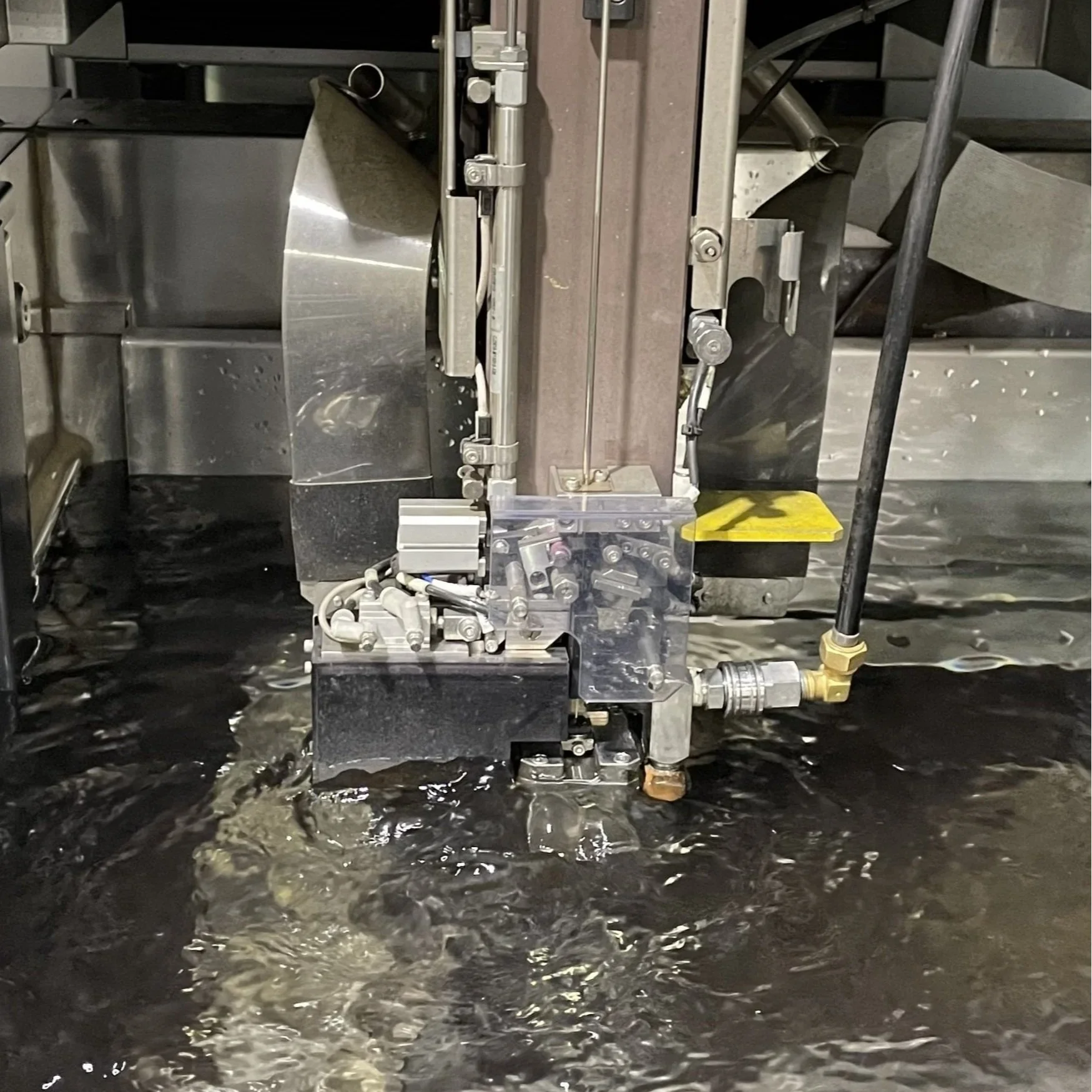
Wire EDM
Wire EDM uses a continuously fed wire electrode to cut intricate profiles through conductive materials. The process is capable of producing:
- Extremely precise contours
- Sharp internal corners
- Tight-tolerance inserts
- Complex shutoff surfaces
- Detailed cavity components
Wire EDM excels where traditional milling tools struggle due to tool diameter limitations or accessibility constraints.
Sinker EDM
Sinker EDM utilizes a custom-machined electrode to create features directly within a workpiece. This process is particularly valuable for:
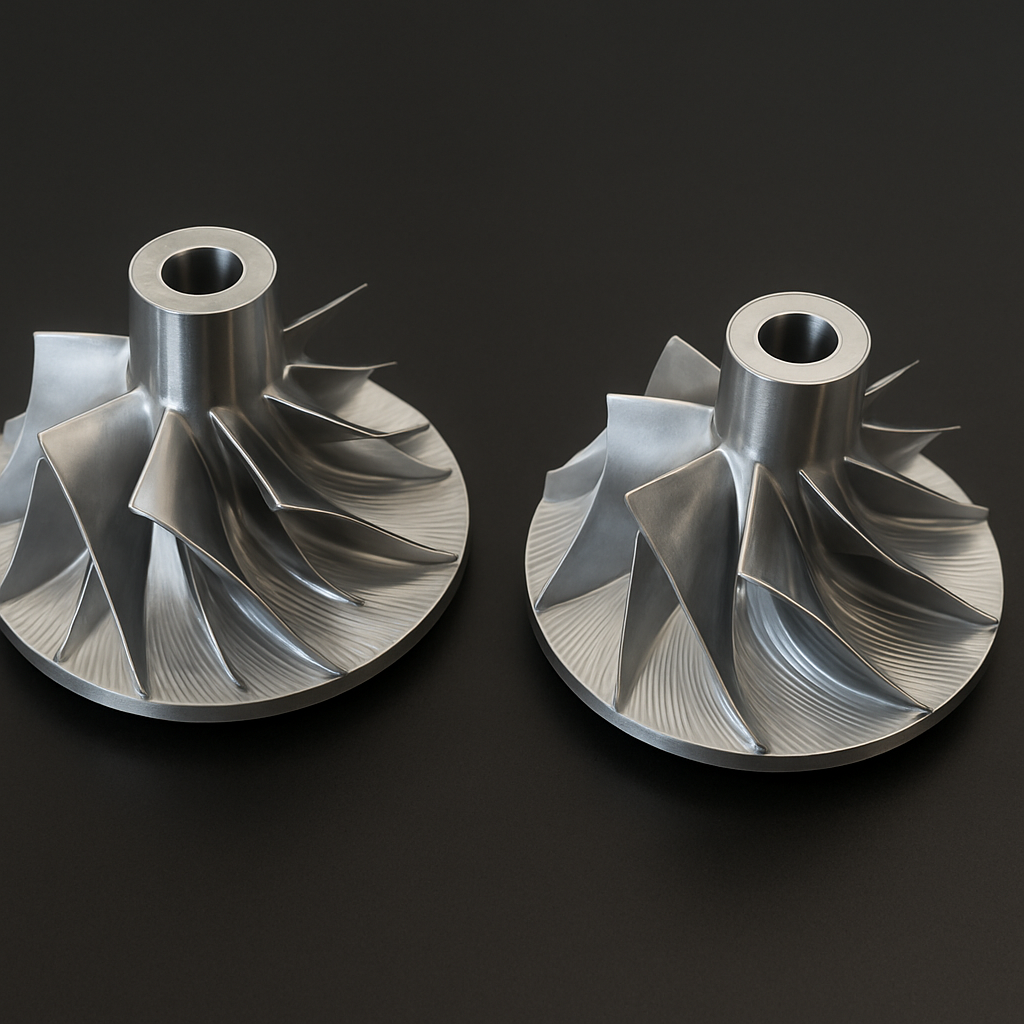
- Achieving deep cavity details
- Refining ribs
- Creating intricate textures
- Building complex mold features
Sinker EDM is ideal for machining hardened conductive materials and complex part details. It excels at producing small deep features better than the capability to mill to repeatable high accuracy.
Together, wire and sinker EDM provide a level of manufacturing flexibility that allows engineers to focus on performance rather than machining limitations.
The Real Challenge: Repeatability, Not Geometry
Modern CAD software can generate nearly unlimited complexity. The real question isn’t whether a feature can be designed; it’s whether it can be manufactured repeatedly and consistently.
A mold insert that varies by a few thousandths of an inch may appear acceptable during initial sampling. However, those small deviations can compound throughout the molding process.
This affects part dimensions, shutoff performance, flash control, mold wear, and long-term repeatability. This is especially important for high-volume production tools where millions of cycles may be expected.
EDM technology provides the precision needed to manufacture tooling components that maintain dimensional consistency from the first shot to the millionth. In many cases, repeatability, not theoretical geometry, is what ultimately determines whether a design succeeds in production.
Why Tight-Tolerance Mold Components Matter
Every mold is a system of interacting components.
From cores, cavities, and slides to lifters, inserts, and shutoffs—each part must all work together with extreme precision to produce consistent parts.
Even minor inaccuracies can create significant downstream issues, including flash formation, dimensional drift, excessive tool wear, poor surface finish, and assembly fit problems.
EDM allows mold builders to create tooling components with tolerances that support long-term stability and performance.
With Versatile, we’ve been routinely using EDM for decades to manufacture precision cavity inserts, core details, shutoff surfaces, wear components, and mold alignment features.
By maintaining tolerances down to ±0.0002”, we work to ensure that tooling performs as designed throughout its lifecycle.
Complex Shutoffs Demand Advanced Manufacturing
Shutoffs are among the most critical features within a mold. They control material flow, define part geometry, and prevent flash from occurring during molding.
As molded parts become more sophisticated, shutoff geometry becomes increasingly complex. Traditional machining methods may struggle to maintain the precision needed for intricate shutoff surfaces, particularly in hardened tooling materials.
EDM offers superior dimensional accuracy, excellent surface finish, ability to machine hardened steels directly, and precise control of mating surfaces. The result is better mold performance, improved part quality, and reduced maintenance requirements over time.
Fine Ribs and Deep Geometry: Where EDM Excels
Many molded components require structural features that’re challenging to machine conventionally. Some examples range from thin ribs for stiffness and complex venting features to deep pockets and narrow slots.
Traditional cutting tools become increasingly limited as feature size decreases and depth increases.
On the other hand, EDM doesn’t face these same restraints.
Because material is removed through electrical discharge rather than physical cutting, extremely fine features can be produced without tool deflection or excessive cutter wear.
This capability lets engineers incorporate design features that improve performance while maintaining manufacturability.
Precision Electrode Manufacturing Drives Better Results
In sinker EDM, the finished component’s quality depends heavily on the electrode’s quality. Electrode design and manufacturing are often the EDM process’s most overlooked aspects, yet they play a critical role in achieving accuracy and repeatability.
Precision electrodes allow for consistent cavity dimensions and reduced spark variation with better surface finishes and feature definition.
At Versatile, electrode manufacturing is treated as an integral part of the tooling process, ensuring that every EDM operation delivers predictable and repeatable results.
How EDM Supports Modern Mold Manufacturing
From the medical field to aerospace and defense, industries continue to demand more complex parts and tighter tolerances, so EDM has evolved from a specialty process into an essential toolmaking technology as a result.
EDM helps bridge the gap between design intent and manufacturing reality by enabling the precise tooling features needed for modern molded parts.
For mold builders, the technology isn’t simply a finishing process anymore. It’s a foundational capability that expands what can be manufactured while maintaining the consistency required for production success.
Precision Makes Possibility Practical
Complex geometry alone doesn’t create successful products.
Manufacturability, repeatability, and tooling performance are what transform a design into a production-ready solution.
By investing in advanced wire and sinker EDM technology, Versatile helps customers pursue more ambitious designs without sacrificing precision or reliability.
When tolerances tighten, geometries become more complex, and performance expectations continue to rise, EDM is the secret key to obtaining the competitive advantage. Advanced mold manufacturers understand this to better support their customers' projects.
Tooling’s future isn’t defined only by what can be drawn in CAD. It’s defined by what can be manufactured repeatedly, accurately, and reliably.