
Why Some Molds Last Millions of Cycles While Others Wear Out Early
/Tooling is one of the largest capital investments made for a production program. A well-designed mold can produce millions of quality parts, while another seemingly similar mold may experience premature wear, increasing maintenance costs, production downtime, and inconsistent part quality long before its expected service life.
What separates these two outcomes?
It’s rarely just one factor.
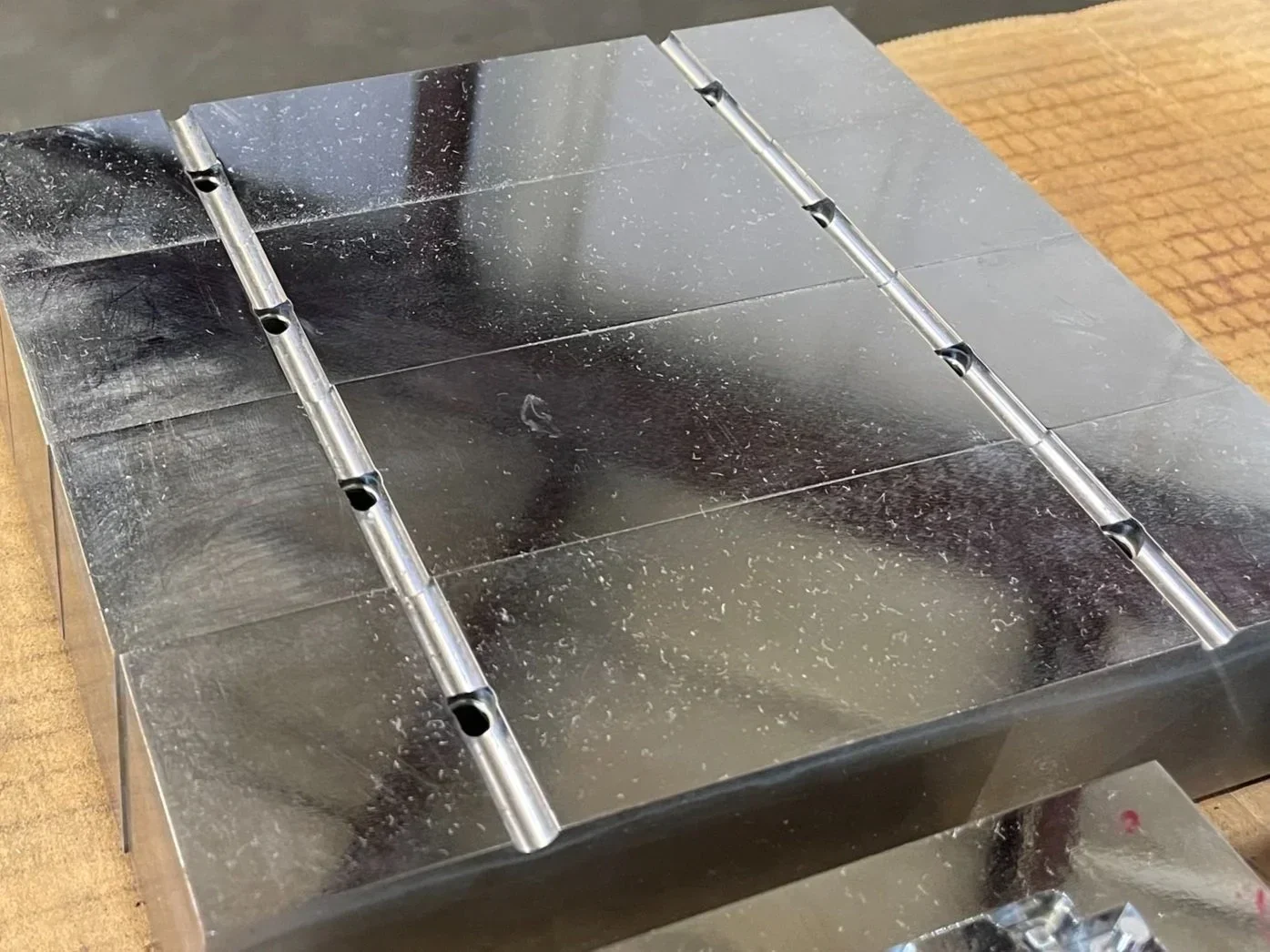
Tool longevity is the result of dozens of engineering decisions made throughout the design, manufacturing, and production lifecycle.
- Steel selection
- Cooling system design
- Surface treatments
- Operating conditions
- Preventive maintenance
- Part design
These all can contribute to how well a mold performs over time.
Molds are long-term production assets. Maximizing their lifespan requires more than repairing wear after it occurs. It requires designing, operating, and maintaining tooling to minimize wear from the very beginning.
Mold Life Must Be Defined Before Design Begins
Not every production program requires the same class of tooling. Expected annual volume, lifetime cycles, cavity count, molded material, reinforcement content, operating temperature, dimensional tolerances, surface-finish requirements, and permitted maintenance all influence how a mold should be constructed.
A prototype or bridge tool may prioritize speed and initial cost, while a high-volume production mold may require hardened cavity components, greater structural support, guided ejection, precision interlocks, replaceable wear inserts, monitored cooling circuits, and a documented spare-parts strategy.
Tool life should also be defined in cycles or shots rather than total parts alone. A multicavity mold produces several parts during each cycle, so total part volume does not directly describe the mechanical life of the tool.
Tool Life Starts with Steel Selection
Selecting the proper tool steel is one of the most important decisions in mold construction.
Not every mold requires the same material. The ideal steel depends on several factors, including:
- Production volume
- Molded material
- Part geometry
- Surface finish requirements
- Expected operating conditions
Different tool steels offer varying levels of hardness, wear resistance, toughness, corrosion resistance, thermal conductivity, and machinability. For example, a mold producing millions of glass-filled engineering thermoplastic parts will experience far different wear conditions than one molding an unfilled consumer-grade resin.
Steel grade alone does not determine performance. Heat treatment, final hardness, microstructure, machining practices, welding procedures, and surface finish can be equally important. A premium steel that is improperly heat-treated or ground can fail earlier than a correctly processed, application-appropriate grade.
Selecting a steel solely based on initial cost may reduce tooling expenses upfront but often increases maintenance costs and shortens the mold’s service life. Instead, steel selection should be based on the total demands of the production program and the long-term cost of ownership.
Surface Treatments Extend Mold Life
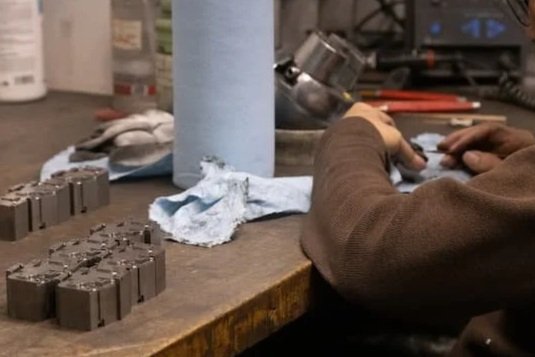
Even high-quality tool steel can benefit from additional surface protection. Surface treatments and coatings improve a mold’s ability to withstand repeated production cycles by increasing hardness, reducing friction, and minimizing abrasive wear.
Depending on the application, surface treatments may improve wear and corrosion resistance, reduce friction and galling, improve release characteristics, and limit material buildup on molding surfaces.
These treatments are particularly valuable when molding glass-filled resins, mineral-filled compounds, or other materials that accelerate tool wear. Selecting the appropriate treatment depends on the molded material, production environment, and performance requirements. Not every mold requires the same solution.
Surface treatment cannot compensate for an underspecified base steel, inadequate heat treatment, poor component fit, or excessive deflection. The coating and substrate must be engineered as a system.
Cooling Design Is About More Than Cycle Time
Cooling systems are often discussed in terms of productivity because they directly influence cycle time. However, cooling design also has a major impact on mold longevity.
Uneven mold temperatures create differential expansion within the tool and differential shrinkage within the molded part. In severe or long-running applications, repeated thermal imbalance can contribute to component movement, seal deterioration, inconsistent clearances, and accelerated wear at mating surfaces. More immediately, it can cause warpage, dimensional variation, inconsistent texture or gloss, and longer cycle times.
An optimized temperature-control system removes heat predictably and maintains the intended temperature balance across the core, cavity, inserts, and moving components. Effective cooling design also improves part consistency by reducing differential shrinkage and helping maintain stable processing conditions.
In many cases, improving cooling benefits both part quality and mold life simultaneously.
Structural Support Protects the Mold
During filling and packing, cavity pressure attempts to separate and deflect the mold plates, inserts, cores, and support structure. Even small repeated movements can create flash, crush vents, wear shutoffs, loosen inserts, and cause dimensional variation.
Properly sized mold plates, support pillars, interlocks, heel blocks, wear plates, guided ejection, and adequate bearing surfaces help transfer production loads through the mold. The tool must also be matched to the molding machine so that platen size, clamp geometry, and applied clamp force support it correctly.
More clamp force is not automatically better. The correct force is enough to resist cavity pressure without unnecessarily compressing, deflecting, or damaging the tool.
Operating Conditions Influence Wear Every Cycle
A mold experiences mechanical and thermal loads every time it opens, closes, fills, packs, cools, and ejects a part. Small process variations repeated over hundreds of thousands of cycles can significantly affect tooling life.
Potential contributors include:
- Excessive clamp force
- High cavity pressure
- Inadequate venting
- Elevated melt or mold temperatures
- Abrasive molding compounds
- Improper resin preparation
High pressure may also indicate an underlying issue such as undersized gates or runners, restricted flow paths, blocked vents, low material temperature, or changes in resin viscosity.
Improper resin preparation can change material viscosity, generate deposits or corrosive byproducts, obstruct vents, and force operators to compensate with more aggressive processing conditions.
Operating outside validated process windows may produce acceptable parts initially while accelerating wear on shutoffs, slides, lifters, ejector systems, gates, runners, and cavity surfaces. Consistent processing isn’t just important for part quality. It also protects the tooling itself.
Mold Protection Prevents Catastrophic Damage
Long mold life depends not only on controlling gradual wear but also on preventing single-event damage. A part or runner left in the mold, an ejector system that has not returned, or a slide that remains out of position can damage cores, shutoffs, leader components, and cavity surfaces during closing.
Low-pressure mold-protection settings should engage before vulnerable components make contact. Closing speed and pressure should be low enough to stop the machine when an obstruction is present but sufficient to close a clean, properly maintained mold. Position sensors and return switches should also be used for ejectors, slides, hydraulic cores, and unscrewing mechanisms where appropriate.
Preventive Maintenance Prevents Major Repairs
One of the most common misconceptions is that molds only require maintenance when production problems begin. By the time flash, sticking parts, dimensional variation, or cosmetic defects become noticeable, wear has often progressed much further than operators realize.
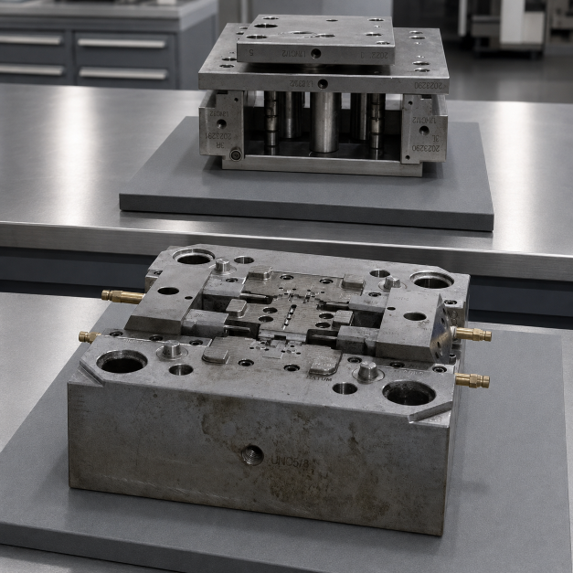
A preventive maintenance program identifies issues before they become production problems. Routine maintenance may include:
- Cleaning cavity surfaces, parting lines, vents, ejector areas, slides, and lifters to remove resin residue, dust, degraded lubricant, and debris
- Inspecting and cleaning cooling circuits to remove scale, corrosion products, mineral deposits, biological contamination, and other flow restrictions
- Checking cooling circuits for flow rate, pressure drop, leaks, and temperature differential to confirm that each circuit is transferring heat effectively
- Inspecting shutoff surfaces for polished or uneven wear patterns, nicks and dents, misalignment, or early signs of flash formation
- Lubricating moving components to the appropriate amount without exceeding the mold builder’s recommendations
- Checking ejector systems so that the components are moving smoothly and returning fully while remaining properly aligned
- Measuring wear-critical features periodically so changes can be identified before they affect part quality
- Replacing seals and wear components, including O-rings, wear plates, bushings, springs, ejector pins, slide retainers, and more
Documenting tool condition so that future teams can see how the mold changes over time
These inspections provide valuable trend data that allows maintenance to be scheduled during planned downtime rather than after unexpected failures. Preventive maintenance reduces repair costs, minimizes unplanned downtime, and extends overall tool life.
Preventive Design Decisions Make the Biggest Difference
The best way to increase mold longevity is to reduce wear before the mold is ever built. Design-for-manufacturing principles help engineers identify opportunities that reduce stress on tooling while maintaining part performance.
Examples include:
- Eliminating unnecessary sharp corners
- Optimizing draft angles
- Maintaining appropriate wall thicknesses and gradual transitions
- Reducing avoidable pressure loss through proper wall thickness, gate sizing, runner design, venting, and flow-path development
- Designing efficient runner systems
- Selecting gate locations and sizes that support balanced filling, effective packing, controlled weld-line placement, and acceptable shear
- Simplifying part ejection
- Minimizing side actions where practical
These seemingly small design decisions can dramatically reduce the forces acting on tooling throughout production. Likewise, designing tooling with maintenance in mind, such as replaceable wear inserts, accessible components, and standardized hardware, makes future servicing faster and less expensive.
Preventive engineering is almost always less costly than corrective engineering.
Mold Longevity Is Also About Process Stability
A mold may be built correctly yet still experience premature wear if production processes are inconsistent or operate outside a validated, tool-safe process window. Stable manufacturing processes reduce unnecessary stress on tooling while producing more consistent parts.
Process stability depends on documented machine parameters, consistent material handling, proper resin drying, statistical process control, and routine equipment calibration.
When production variables remain consistent within a validated process window, the mold experiences predictable operating conditions that help preserve dimensional accuracy and component integrity. In contrast, frequent process adjustments, inconsistent setups, and overly aggressive processing conditions increase the likelihood of uneven wear and shortened tool life.
A Long-Lasting Mold Is a Long-Term Investment
The mold’s true value isn’t measured by how quickly it produces its first parts; it’s measured by how reliably it performs over years of production.
A mold that consistently produces quality parts through millions of cycles delivers value in many ways. Maintenance costs are lower, unplanned downtime decreases, production efficiency is improved, and part quality is much more consistent.
When viewed over a manufacturing program’s lifespan, these benefits often outweigh the initial investment made in better tooling materials, engineering, and maintenance practices.
Partnering for Long-Term Tool Performance
Versatile Mold and Design's engineers recognize that every mold represents a significant investment in a customer’s production program.
That’s why we approach tooling with a long-term mindset. Our team considers material selection, tooling design, processing conditions, maintenance planning, and production requirements as interconnected elements of overall mold performance.
Whether supporting new tooling or inheriting an existing mold through a transfer program, our goal is the same: maximize tool life while delivering consistent, repeatable production. By combining engineering expertise with disciplined manufacturing practices, we help customers protect their tooling investments and maintain reliable production for years to come.
Molds that last millions of cycles are not simply better built. They are engineered, operated, protected, and maintained with longevity in mind.