
Mastering the Art of Thermoset Mold Building
/Thermoset molding is a special field in plastics manufacturing. While thermoplastics dominate many consumer and industrial applications, thermoset materials remain essential where durability, heat resistance, electrical insulation, and structural integrity are critical.
Building molds for thermoset materials is a highly specialized discipline, distinct from conventional plastic tooling. It requires advanced technical expertise, meticulous engineering, and extensive practical experience. Professionals must understand the curing behavior of thermoset compounds under heat and pressure, as well as develop tooling solutions that effectively control material flow and maintain thermal stability. Every detail matters to make sure that everything is carefully considered and executed.
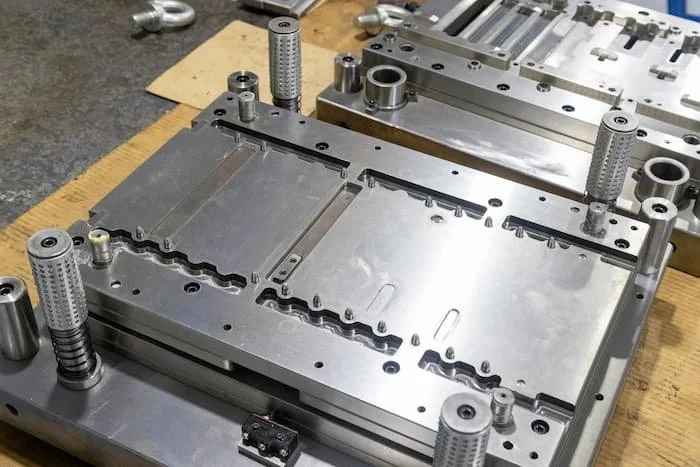
Precision Molds
For the professional engineers over at Versatile Mold and Design, thermoset mold building is both a science and an art. The team’s expertise in material behavior, heat management, and complex part geometry allows them to engineer tooling that performs reliably under demanding production conditions.
Understanding the Unique Nature of Thermoset Materials
The fundamental difference between thermosets and thermoplastics lies in how they respond to heat.
Thermoplastics are very versatile; they melt when heated can be reshaped multiple times. Thermoset materials, however, undergo a chemical curing reaction during molding. Once cured, the material forms permanent cross-linked molecular structures that can’t be remelted.
This chemical transformation creates components that offer exceptional thermal stability, high mechanical strength, superior electrical insulation, and long-term dimensional stability.
Common thermoset materials include phenolics, epoxies, polyester compounds, and bulk molding compounds. These materials are widely used in demanding environments such as electrical infrastructure, automotive systems, aerospace components, and industrial equipment.
Because thermosets cure rather than melt, mold design must account for how the material flows, reacts, and solidifies inside the cavity.
Why Thermoset Mold Building Requires Specialized Expertise
Thermoset molds must accommodate several complex behaviors that aren’t present in thermoplastic tooling.
First, the material enters the mold as a preheated compound that begins reacting immediately once inside the cavity. The curing process generates heat, increases viscosity, and ultimately locks the material into its final shape.
Second, the thermoset compounds often contain fillers such as glass fibers or mineral reinforcements that affect flow patterns and tool wear.
Finally, curing cycles must be carefully controlled to avoid incomplete curing, surface defects, or dimensional instability.
These factors mean that thermoset tooling requires precise engineering of gate design and material flow paths, venting systems to release trapped gases, heating channels and thermal control, and parting lines and ejector systems.
Without careful attention to these elements, production issues can quickly arise, including short shots, burn marks, voids, or inconsistent cure properties.
Engineering for Heat Management and Cure Control
Heat management is one of the most critical aspects of thermoset mold design.
Unlike thermoplastic molds, which primarily rely on cooling systems, thermoset molds must maintain uniform and controlled heating throughout the tool. The goal is to activate the curing reaction evenly while preventing localized overheating or premature curing.
Versatile’s engineers carefully design heating systems that regulate mold surface temperature, thermal distribution across cavities, and cure timing and cycle efficiency.
Heating channels and platen contact areas are strategically positioned to ensure consistent temperature profiles. Proper heat management helps maintain dimensional accuracy, improves surface quality, and reduces internal stresses within the molded part.
Achieving this balance requires extensive experience with thermoset material behavior and curing kinetics.
Designing Tooling for Complex Thermoset Parts
Thermoset components are often used in applications where both structural integrity and electrical/thermal performance are critical. As a result, many parts feature complex geometries that present unique tooling challenges.
Examples include thin-wall electrical insulators, reinforced structural housings, high-voltage components, and industrial equipment enclosures, to name a few.
Complex parts demand molds capable of handling intricate features such as deep ribs, tight tolerances, threaded inserts, and detailed surface finishes.
While emphasizing early collaboration with clients, Versatile’s engineers begin each design phase with advanced CAD modeling and simulation tools to evaluate material flow paths, potential air traps, gate placement, and part shrinkage and dimensional behavior. This ensures that all design parameters and tolerances are met.
This design analysis helps ensure that the finished tool produces parts that meet both functional and cosmetic requirements.
Precision Machining and Tool Construction
Once the mold design is finalized, precision machining transforms engineering concepts into physical tooling.
Thermoset molds must be manufactured to extremely tight tolerances to ensure reliable operation under high temperatures and pressures. Versatile employs advanced machining technologies including multi-axis CNC milling, electrical discharge machining, and high-precision grinding, polishing, turning, and finishing.
These processes allow the team to create intricate cavity features, precise shutoff surfaces, and complex internal structures that support thermoset molding performance.
Tool steel selection is equally important. Materials must withstand repeated thermal cycling, abrasive fillers within thermoset compounds, and long production runs without degrading cavity surfaces. With our expertise, our teams understand how to choose the right tool steels that properly match the molded part material and the process.
Every component of the mold, from cores and cavities to slides and ejector systems, is built with durability and precision in mind.
Testing, Validation, and Production Readiness
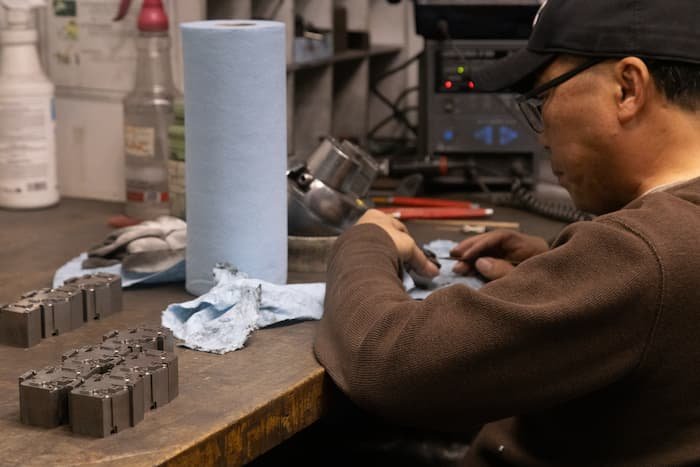
Before a mold enters full production, thorough testing and validation are essential.
Engineers need to evaluate several aspects during initial sampling runs, including part dimensional accuracy, cure consistency, surface quality, material flow performance, and cycle time efficiency.
We conduct rigorous testing to make sure that the mold operates flawlessly and meets all quality standards. Then, any necessary adjustments can be made to optimize performance before the tool enters high-volume manufacturing.
This stage is critical because thermoset molding leaves little room for error. Once a part cures inside the mold, defects can’t be corrected through reheating or reshaping. Proper validation ensures that the tool produces consistent parts from the first production run onward.
The Value of Experience in Thermoset Tooling
While advanced engineering tools and machining technologies play a vital role in thermoset mold building, experience remains one of the most valuable assets.
Material behavior, curing dynamics, and thermal management can’t always be predicted perfectly through simulation alone. Many solutions come from years of practical knowledge gained through real-world tooling challenges.
Versatile brings decades of thermoset molding experience to every project. This deep understanding allows the team to anticipate potential issues early in the design process and implement solutions before they impact production.
From selecting the right tool steel to optimizing heating strategies, that expertise ensures that every mold performs reliably and efficiently over its lifecycle.
Partnering with Experts in Thermoset Mold Building
Thermoset molding continues to play a critical role in industries that require high-performance components capable of withstanding demanding conditions.
However, success with thermoset materials depends heavily on the quality of the mold itself. Designing and building these tools requires a combination of engineering precision, advanced machining capabilities, and extensive hands-on experience.
With Versatile Mold and Design, you get all three. By mastering the art and science of thermoset mold building, the company provides OEMs with tooling solutions that support complex part designs, stable production cycles, and long-term manufacturing success.
For manufacturers working with thermoset materials, partnering with experienced mold builders isn’t simply beneficial. It’s essential.