
When Should You Repair, Modify, or Replace an Injection Mold?
/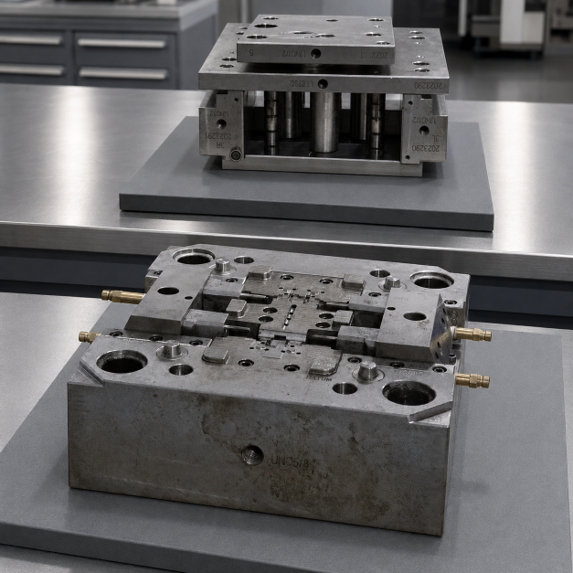
Injection molds are significant manufacturing investments designed to produce consistent, high-quality components over thousands or even millions of production cycles. However, even the most precisely engineered molds experience wear, changing production requirements, and performance challenges over time.
When problems begin to appear, manufacturers face an important decision: Should the injection mold be repaired, modified, or replaced entirely?
The answer isn't always straightforward. A mold experiencing dimensional inconsistencies may need a relatively simple repair, while another tool with similar symptoms could require extensive modifications or a complete rebuild. Factors such as mold condition, production volume, material requirements, part geometry, and long-term manufacturing goals all influence the best course of action.
Understanding the differences between mold repair, modification, and replacement can help manufacturers reduce downtime, control costs, and extend the useful life of their tooling.
Understanding the Difference Between Repair, Modification, and Replacement
Although these terms are sometimes used interchangeably, they represent three distinct approaches to injection mold maintenance.
Mold Repair:
Restoring a damaged or worn mold to its original intended operating condition. Repairs typically address specific problems without fundamentally changing the tool's design.
Mold Modification:
Altering an existing mold to accommodate changes in part geometry, production requirements, material selection, or manufacturing performance.
Mold Replacement:
Manufacturing a new mold when the existing tool can no longer reliably meet production requirements or when extensive repairs and modifications are no longer economically practical.
Each option has advantages, but selecting the right approach requires a thorough understanding of the mold's current condition and future production demands.
When Injection Mold Repair Makes Sense
Repair is often the most practical solution when a mold's fundamental design remains sound but individual components have been damaged or worn down.
Over time, repeated molding cycles expose tooling to mechanical forces, thermal cycling, abrasive materials, and continuous movement. These conditions can gradually affect critical surfaces and components.
Common injection mold repairs include:
Replacing worn ejector pins, sleeves, and bushings
Repairing damaged cavity or core surfaces
Restoring worn shutoffs and parting lines
Replacing damaged slides, lifters, or wear plates
Addressing cooling-channel leaks or restrictions
Repairing gates, runners, or localized tooling damage
Restoring alignment between mold components
Signs That a Mold May Need Repair
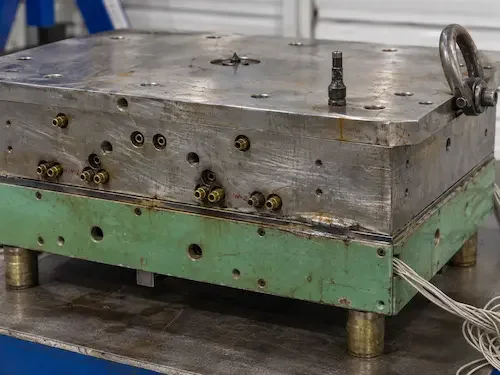
Several production symptoms can indicate developing tooling problems.
Increased Flash:
Worn shutoffs, damaged parting surfaces, or alignment issues can allow material to escape the cavity.
Ejection Problems:
Worn or misaligned ejector components may cause sticking, drag marks, part damage, or inconsistent release.
Dimensional Drift:
Wear in critical cavity features or moving components can gradually affect part dimensions.
Longer Cycle Times:
Cooling restrictions, poor thermal transfer, or mechanical issues may reduce production efficiency.
Surface Defects:
Scratches, corrosion, or damaged cavity finishes can transfer imperfections to molded components.
When these problems are localized and the remaining mold structure is in good condition, targeted repairs can restore performance without the cost of manufacturing an entirely new tool.
However, repairs should address the underlying cause rather than simply eliminating visible symptoms.
Related Reading
Learn the 5 warning signs that your molds and dies need maintenance before it’s too late
When Injection Mold Modification Is the Better Option
Sometimes an injection mold is functioning as originally designed, but the original design no longer meets production requirements.
In these situations, modification may be more appropriate than repair. Mold modifications involve intentionally changing the tool's geometry, components, or operating characteristics to support new requirements.
Part Design Changes
Product designs frequently evolve after initial production begins. Manufacturers may need to adjust wall thickness, add mounting features, revise ribs or bosses, modify tolerances, or change cosmetic details.
Depending on the geometry and available tool steel, these changes may be possible through cavity modifications, replacement inserts, or additional tooling components.
However, not every design change is feasible within an existing mold. Changes requiring steel to be added, rather than removed, can be particularly challenging and may require welding, inserts, or replacement components.
Improving Mold Performance
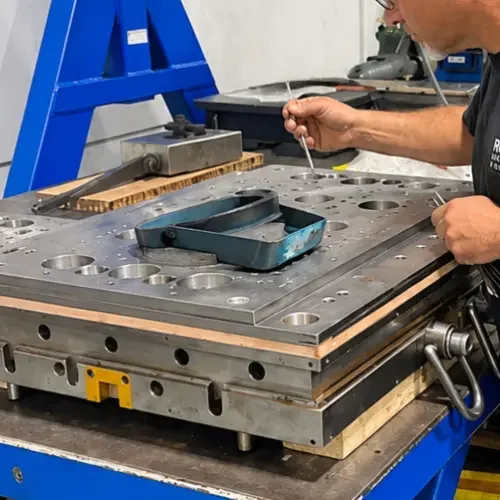
Modification can also address manufacturing inefficiencies that weren't apparent during initial tool development.
Examples include:
Relocating or resizing gates
Improving venting
Revising cooling circuits
Modifying ejection systems
Adding or adjusting slides and lifters
Improving parting-line or shutoff geometry
Converting certain features to replaceable inserts
These changes may help reduce scrap, improve part consistency, simplify maintenance, or support more efficient cycle times.
Accommodating Material Changes
Switching from one resin to another can introduce new processing requirements. Different materials exhibit different shrinkage rates, flow characteristics, processing temperatures, and reinforcement levels.
For example, converting to a glass-filled engineering thermoplastic may increase abrasive wear and require additional consideration of gate design, cavity surfaces, and tooling materials.
A material change should trigger a review of whether the existing mold can accommodate the new processing conditions. The key question is whether the current mold architecture can support the desired change without introducing unacceptable production risks.
When Is It Time to Replace an Injection Mold?
Although repairs and modifications can extend tool life, there are situations where replacing the injection mold is the better long-term investment.
Extensive or Repeated Wear
When multiple critical components have deteriorated, repeated repairs may become increasingly expensive.
Widespread cavity wear, recurring alignment problems, damaged mold bases, or deteriorating structural features can indicate that the tool is approaching the end of its practical service life.
Recurring Quality Problems
A mold that repeatedly produces flash, dimensional variation, warpage, or other defects may have fundamental design limitations.
If repairs fail to provide lasting improvements, a new mold may offer a more reliable solution.
Major Product Redesigns
Significant changes to part geometry, cavity layout, or overall dimensions may exceed the capabilities of the existing tool.
In these cases, modifying the original mold could become more complicated and expensive than engineering a new one.
Increased Production Requirements
A mold originally designed for low-volume production may not be suitable for substantially higher production demands.
Increased volume can justify a new tool with additional cavities, more durable components, improved cooling, automation compatibility, or a more efficient runner system.
Obsolete or Difficult-to-Maintain Tooling
Older molds may contain components that are difficult to replace, lack reliable documentation, or use designs that complicate maintenance.
A replacement tool provides an opportunity to incorporate updated manufacturing technologies and improve long-term serviceability.
Evaluating the Total Cost of Each Option
The lowest repair estimate isn't necessarily the most economical solution.
Manufacturers should evaluate the total cost of ownership when deciding whether to repair, modify, or replace an injection mold.
Important considerations include:
| Factor | Questions to Consider |
|---|---|
| Immediate Cost | What will the repair, modification, or replacement cost? |
| Downtime | How long will production be interrupted? |
| Remaining Tool Life | How many additional cycles can the existing mold reasonably support? |
| Production Volume | Will future demand increase or decrease? |
| Part Quality | Can the current tool consistently maintain specifications? |
| Maintenance | Will recurring repairs continue to increase costs? |
| Cycle Time | Could a modified or a new mold improve production efficiency? |
| Future Flexibility | Will the tool accommodate anticipated product changes? |
For example, repairing an aging mold may provide a short-term solution, but if the tool requires frequent maintenance and causes repeated production interruptions, replacement may deliver better long-term value.
Conversely, replacing a structurally sound mold because of a single damaged insert may represent an unnecessary investment. The decision should balance immediate costs with production reliability, expected tool life, and future manufacturing requirements.
Related Reading
Learn how tooling design, material selection, and maintenance influence mold longevity in our article, Why Some Molds Last Millions of Cycles While Others Wear Out Early
Why a Professional Mold Evaluation Matters
Before committing to a repair, modification, or replacement, manufacturers should conduct a detailed tooling evaluation.
A comprehensive assessment may include:
Visual inspection of cavities, cores, and parting surfaces
Measurement of critical tooling dimensions
Evaluation of wear patterns and damage
Inspection of slides, lifters, and ejector systems
Cooling-channel inspection and testing
Review of material and processing requirements
Analysis of production defects and maintenance history
Evaluation of remaining tool life
Assessment of modification feasibility
Understanding why a mold is experiencing problems is just as important as identifying the visible damage. For example, repeated shutoff wear may indicate alignment issues, while recurring part distortion could be related to cooling, material behavior, or the original tool design.
Correctly identifying the root cause helps prevent manufacturers from investing in repairs that fail to resolve the underlying problem.
Preventative Maintenance Can Delay the Need for Major Repairs
One of the most effective ways to extend injection mold life is through a structured preventive maintenance program. Regular inspections and maintenance help identify developing issues before they result in major tooling damage or production interruptions.
Recommended activities include cleaning vents and cooling channels, inspecting shutoffs, lubricating moving components, checking ejector systems, monitoring wear-critical dimensions, and replacing consumable components.
Documenting maintenance activities and tracking mold cycle counts can also reveal patterns of deterioration.
Rather than waiting for a mold to fail, manufacturers can schedule maintenance around production requirements and address wear before it affects part quality.
A proactive approach helps protect the original tooling investment while reducing the likelihood of unexpected downtime.
How Versatile Mold & Design Supports the Entire Tooling Lifecycle
Deciding whether to repair, modify, or replace an injection mold requires expertise in tooling design, precision manufacturing, material behavior, and production requirements.
Versatile Mold & Design provides complete design, build, and support services for precision molds and dies, helping manufacturers evaluate tooling challenges and identify practical solutions.
Whether an existing mold requires localized repairs, engineering modifications, replacement components, or a completely new design, Versatile approaches the project with an understanding of how each tooling decision affects production performance.
With capabilities in precision machining, wire EDM, sinker EDM, mold design, and tool manufacturing, Versatile supports the development and maintenance of tooling built for repeatability, durability, and long-term value.
Make the Right Decision for Your Injection Mold
Injection molds don't need to be replaced simply because they show signs of wear. At the same time, repeatedly repairing a tool that can no longer meet production requirements may create unnecessary costs and reliability concerns.
The right decision depends on the mold's condition, the cause of its performance issues, the feasibility of modifications, and the manufacturer's long-term production goals.
Versatile can help you determine whether repairing, modifying, or replacing your injection mold is the most practical solution. From precision tooling repairs and engineering modifications to complete mold design and manufacturing, our team provides the expertise needed to protect your tooling investment and support consistent production.
Contact Versatile today to discuss your existing tooling and determine the best path forward.